An ounce of preventative is worth a pound of cure. Never has that been so apparent to the general public than it has in the past year. A good diet and adequate exercise will keep us healthy. And when it comes to plants, good health starts in soil. One of the best preventatives is compost.
Compost is decomposed organic matter you can mix into the garden or topdress over turf. It improves pore space to increase oxygen that roots require. At the same time, it has good water retention. As organic matter decomposes, it releases nutrients. This doesn’t happen spontaneously. Microorganisms, such as fungi and bacteria, are doing the work. These microbial associations improve plant health and reduce pest problems.

In a recent experiment, it was found that the horse manure compost grew twice as large as the field dug soil. Hardy Brown/Chainey Briar Stables/Provided
The quality of compost matters. We recently did an experiment at the horticulture program at Trident Technical College, growing coleus in field dug soil, mushroom compost from a bag, and freshly composted horse manure from Chainey Briar Stables in Ridgeville. It was no surprise that the horse manure compost grew twice as large as the field dug soil. However, the bagged mushroom compost fared only slightly better than the soil, illustrating the power of quality compost.
You can make your own compost, although it’s difficult for most homeowners to make large quantities. It can be locally purchased in bulk at Bees Ferry Landfill or local landscape suppliers. It can also be picked up in bags at garden centers. Bags that have been sitting on the shelf may not be as lively. While you’ll still get the benefits of organic matter, the nutrients and microbial activity may be lower, as illustrated in our experiment.
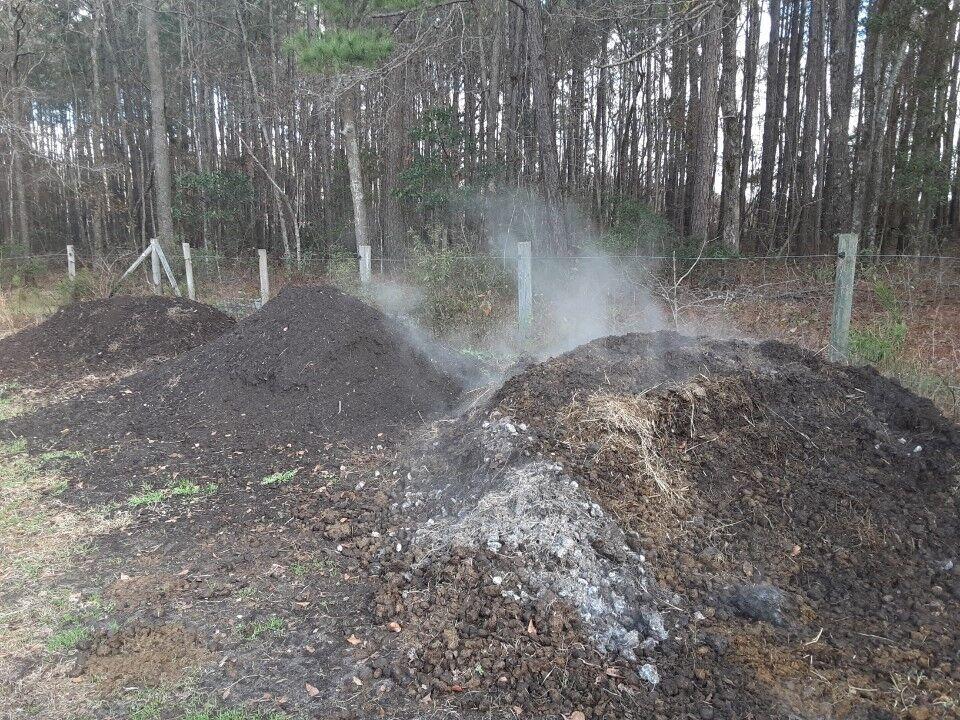
Composting at home isn’t difficult, but it takes diligence. Simply dumping food scraps on a pile of grass clippings won’t do it. You’ll need a brown-to-green ratio to keep it properly active. Browns are a source of carbohydrates for microbes, such as straw, twigs, paper or dry leaves. Greens are fresh ingredients that provide nitrogen and enzymes, as well as moisture. Greens include grass clippings, food scraps or coffee grounds. Avoid things like meat or dog feces that risk pathogens or attract scavengers.

You want to occasionally turn the pile with a pitchfork to keep it aerated. Moisture should be at about 50 percent, which can be measured with a simple moisture gauge. An active compost pile is hot, which means the microbes are active. The temperature should be around 150 degrees Fahrenheit. Compost can be ready for the garden in four to eight weeks.

Redworms will do the work of consuming food scraps when added to a vermicomposter. Tony Bertauski/Provided
Vermicomposting adds worms to the mix. Redworms, not earthworms, will do the work of consuming food scraps. Worm waste, or castings, are nutrient-rich. Redworms can be purchased locally or online.
Vermicomposting can be done in a plastic bin. Drill small holes in the bottom corners for drainage. Larger holes can be drilled near the top for air exchange. Add bedding material, such as shredded paper, to provide the carbohydrate source. Soak the paper and squeeze out the excess, then toss in food scraps as you get them.
I hate wasting that black compost tea through the drain holes, so we purchased a vermicomposting tower. It’s a stack of trays that are easier to handle and compost can be harvested in stages. More importantly, compost tea collects in the bottom tray. A spigot makes it easy to fill watering cans to add a lively nutrient boost to flowers and veggies.

Some sources suggest vermicomposting can be done inside the house. I’ve found fruit flies are pretty hip to this idea. I keep the vermicomposter in the backyard. Not only will you keep your kitchen fruit fly-free, you’ll attract black soldier fly larvae. These are large, sort of flat maggots that love food scraps as much as redworms do. They’re free, courtesy of nature. And they do serious work. I’ve seen them consume watermelon rinds down to the thin green skin in less than a week.
And if you have chickens, you’ll have protein snacks. Throw some maggots on the ground and watch them go bonkers.

Speak Your Mind